Why Successful Men Still Feel Uncomfortable in Their Own Clothes.
You have spent years getting to where you are. The track record is there. The results speak. So why, when you look in the mirror before a big meeting or…

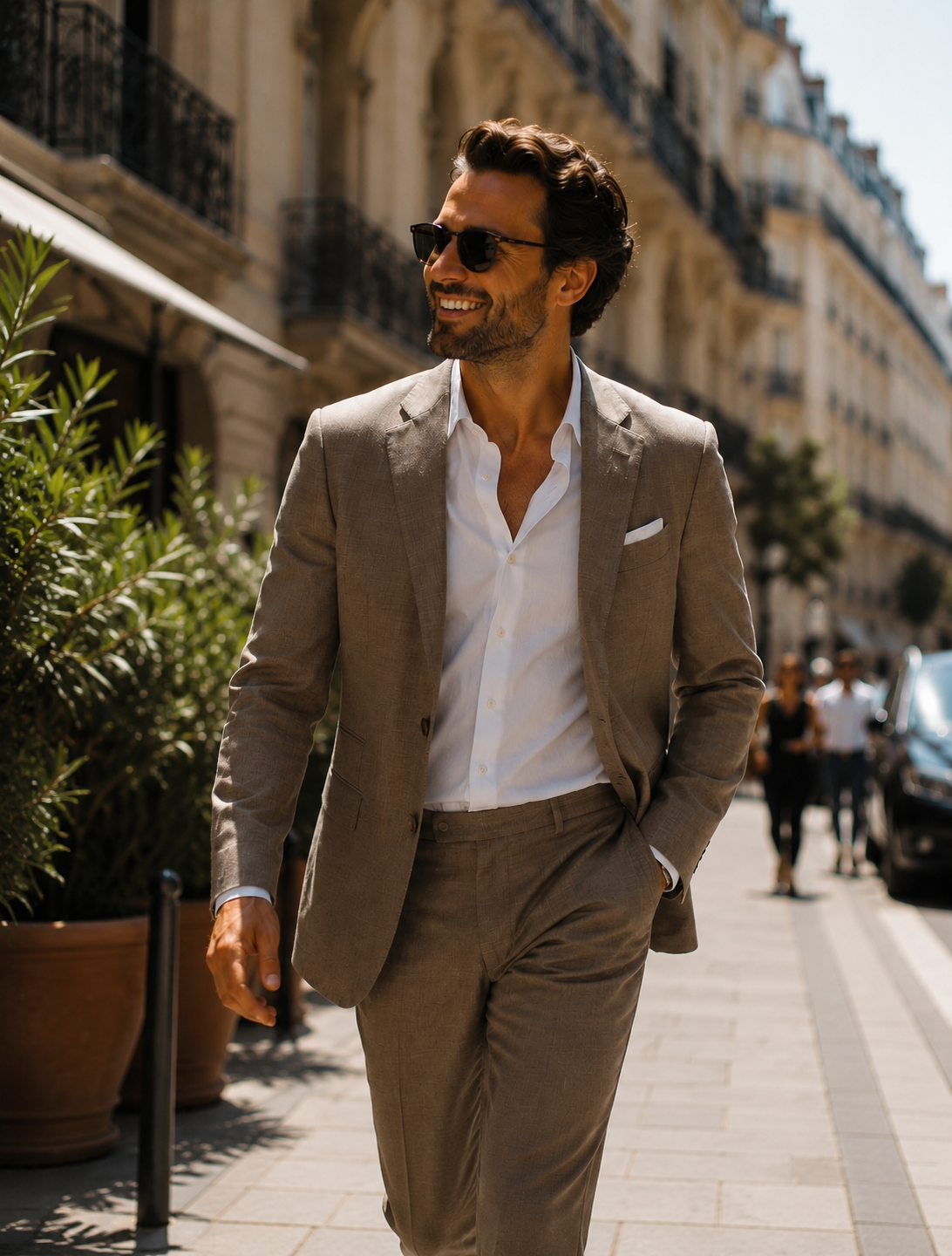
Us Brits are usually prepared for wets in the city, not sweats. This heatwave has got us more than just hot under the collar, we are having a full style meltdown, or as I have been calling it, Sweats in the City. Bags are heavier than they need to be, fabrics are working against us, and half the capital looks like it just rolled out of bed.
British men know how to navigate grey weather, cold weather, and wet weather extremely well. A heatwave is not something we are used to, yet it is something we now need to learn to navigate properly, as high temperatures look set to stay with us for the coming weeks and, quite possibly, for summers to come.
This advice is aimed at anyone who wants to know how to dress for work in hot weather, particularly when a dress code limits your options. Once you understand fabric weight, colour, and a few key style choices, it becomes far easier to dress like you are not trying too hard, and only need to contend with the weather.
Worth noting early on, Brits generally know how to dress for heat when they are on holiday. The problem is that holiday wardrobe and a working wardrobe are entirely different things.
What works on a beach in Portugal does not translate to a commute or a client meeting, and this guide is specifically about the latter.
Here is the ultimate guide, from top to toe.

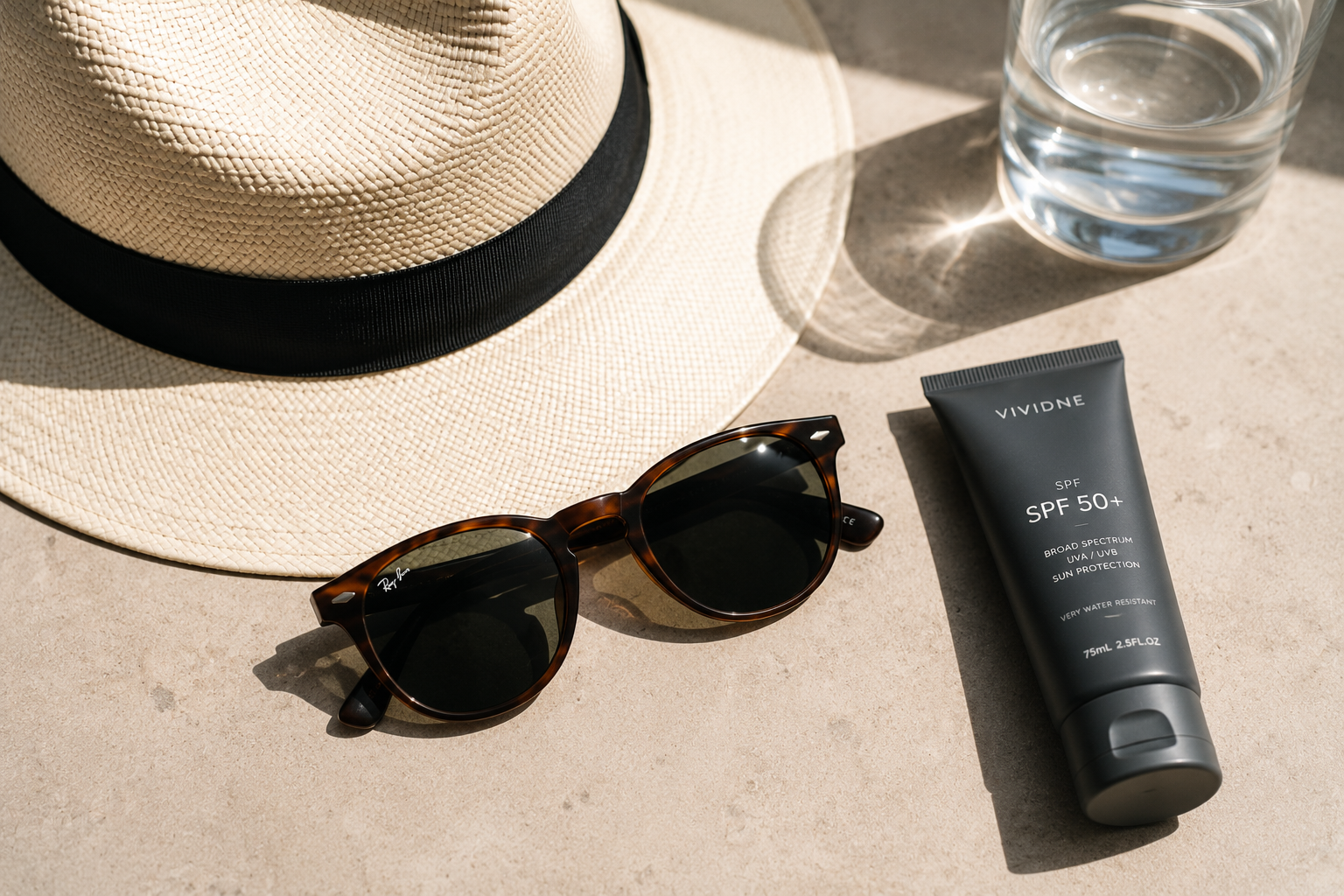
Style starts before you even reach for clothing. Protecting yourself properly from the sun is not just sensible, it is part of dressing with intention rather than simply getting dressed.
The biggest mistake people make in a heatwave is choosing fabric based on colour alone. Weight matters just as much. A heavy cotton in white can trap more heat than a proper lightweight weave in navy. The right fabric does the heavy lifting so you do not have to think about the heat all day.
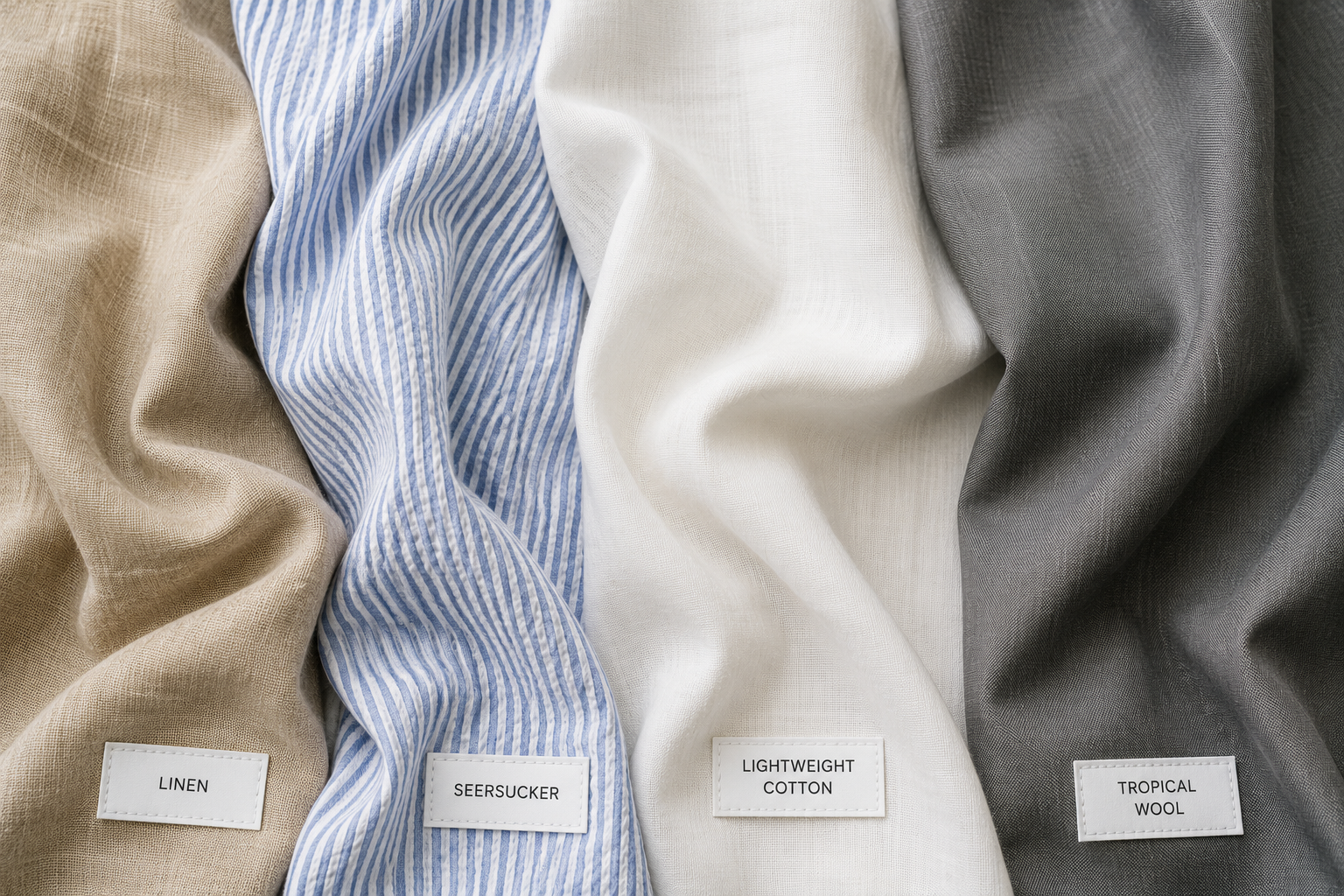
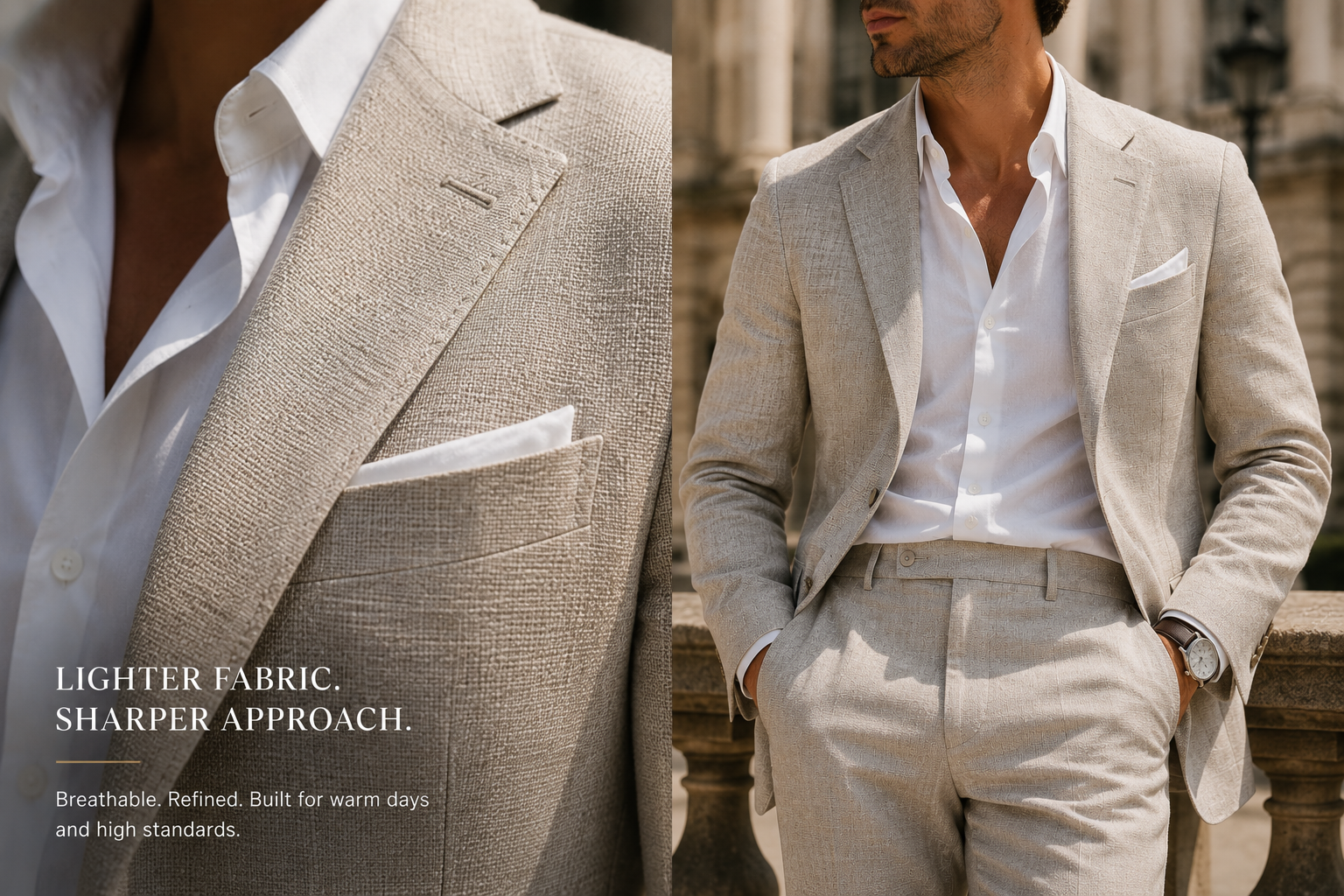
Look for natural fibres such as linen, cotton, and lightweight wool blends. Thesebreathe. Synthetic fabrics trap heat and moisture and will let you down by mid morning.
Seersucker deserves a specific mention. The fabric’s slightly puckered texture means it barely touches the skin, which allows air to circulate underneath rather than fabric clinging to you all day. It has a long history as proper hot weather clothing for good reason.
Colour still plays a role, which is why lighter shades appear far more often in summer wardrobes than winter ones. Lighter shades reflect heat better than dark ones, but light does not have to mean boring. Navy still works perfectly well in summer, it is simply not doing all the work on its own.
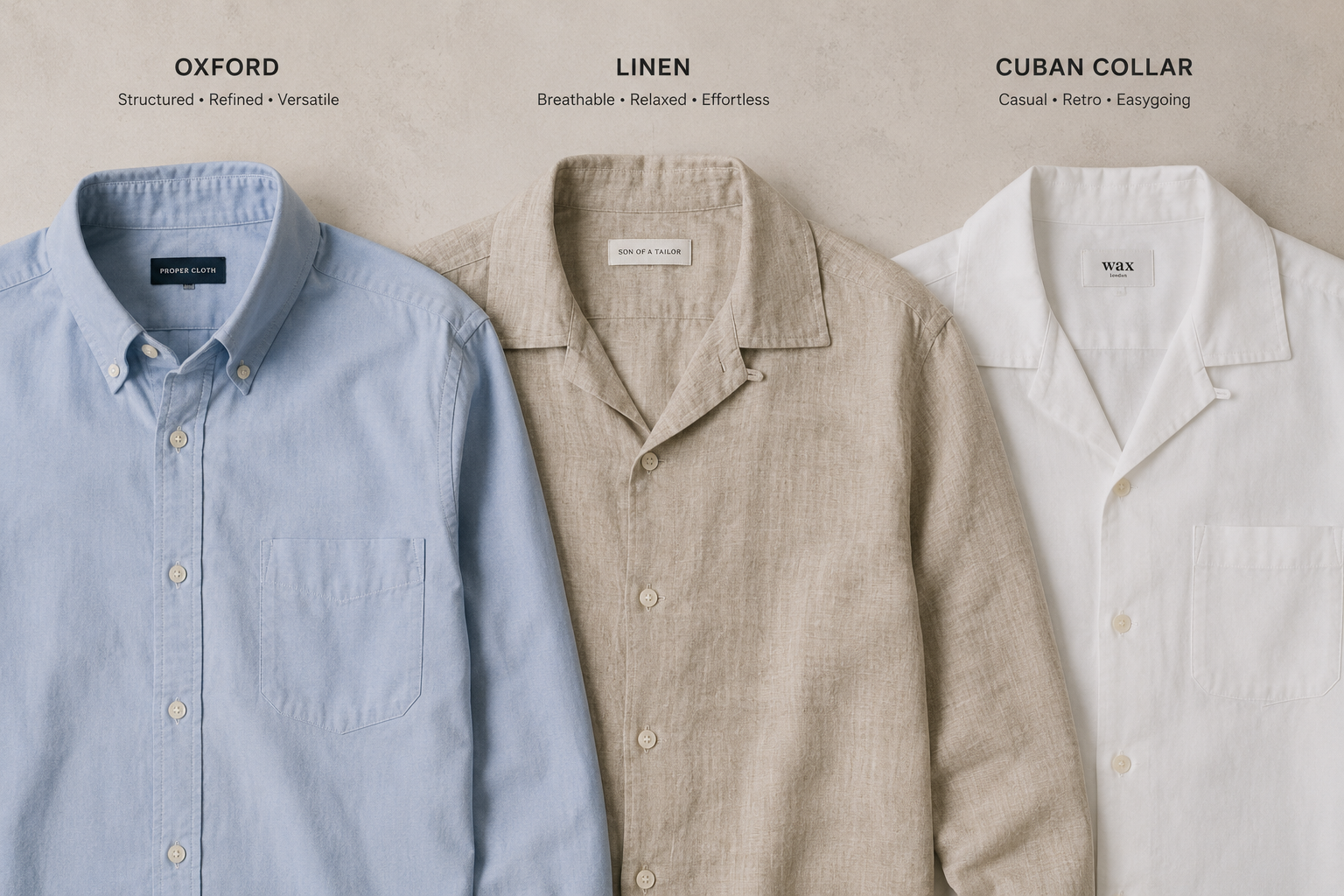
Structured, looser fit trousers and shorts, both with belt loops, read as intentional rather than loungewear, and work well across both formal and relaxed workplaces. A belt finishes the look properly and adds a small but noticeable layer of polish that separates smart summer dressing from simply throwing on the lightest thing in the wardrobe.
Structure is what looks professional here, and it is worth being clear that a looser fit is not the same thing as oversized. The style to aim for throughout is easy and breezy, not oversized. There is a real difference between a relaxed fit that moves well in the heatand something that simply looks too big. Comfort is not an excuse to dress like you are heading to the beach, unless of course the beach is where you actually work.
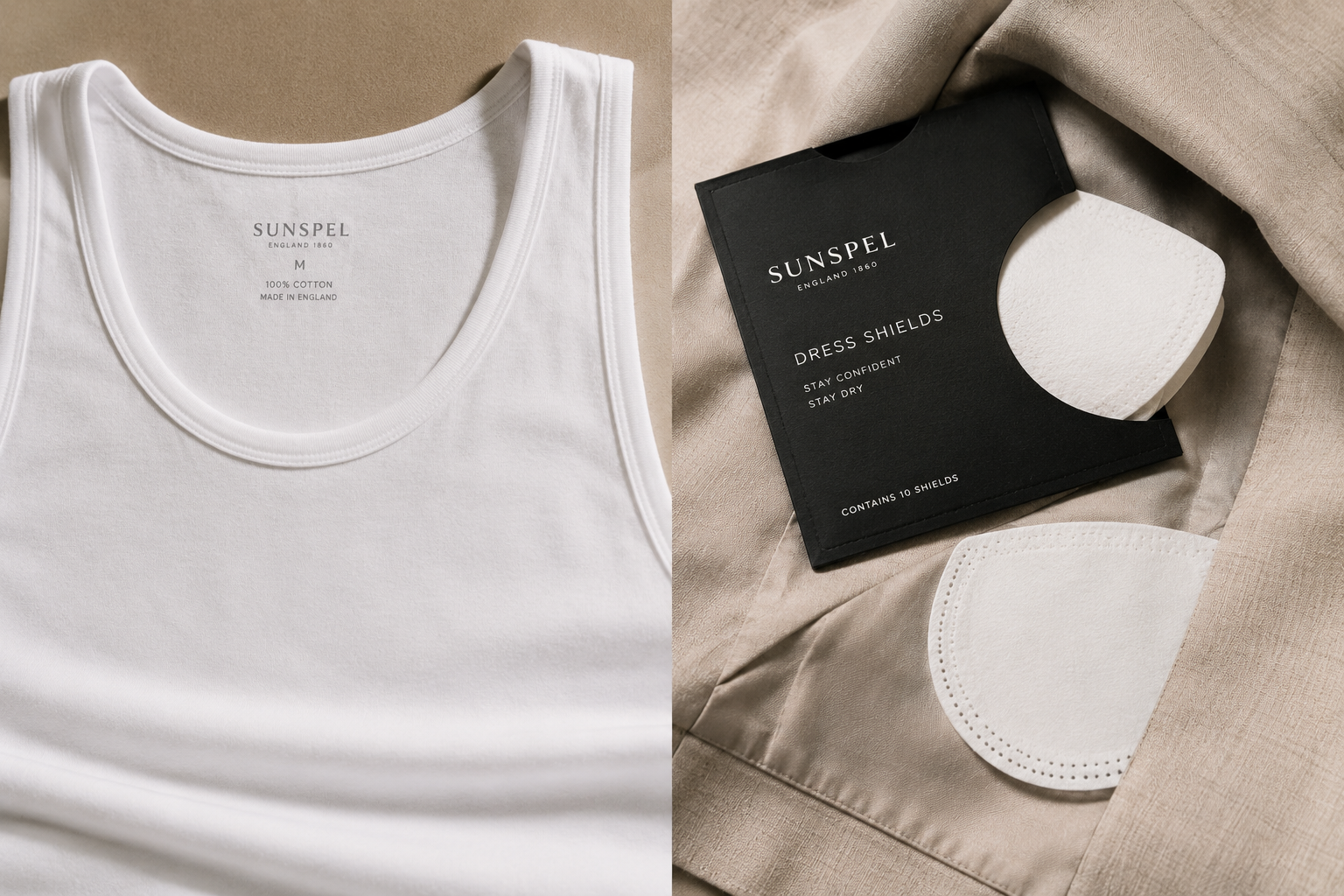
Fabric and colour choices only go so far. If sweat is a genuine concern, and for most people in serious heat it is, there are a few practical solutions worth knowing about.
I have covered this in more depth in a previous blog and YouTube video, both worth a watch if sweat management is a particular concern for you.
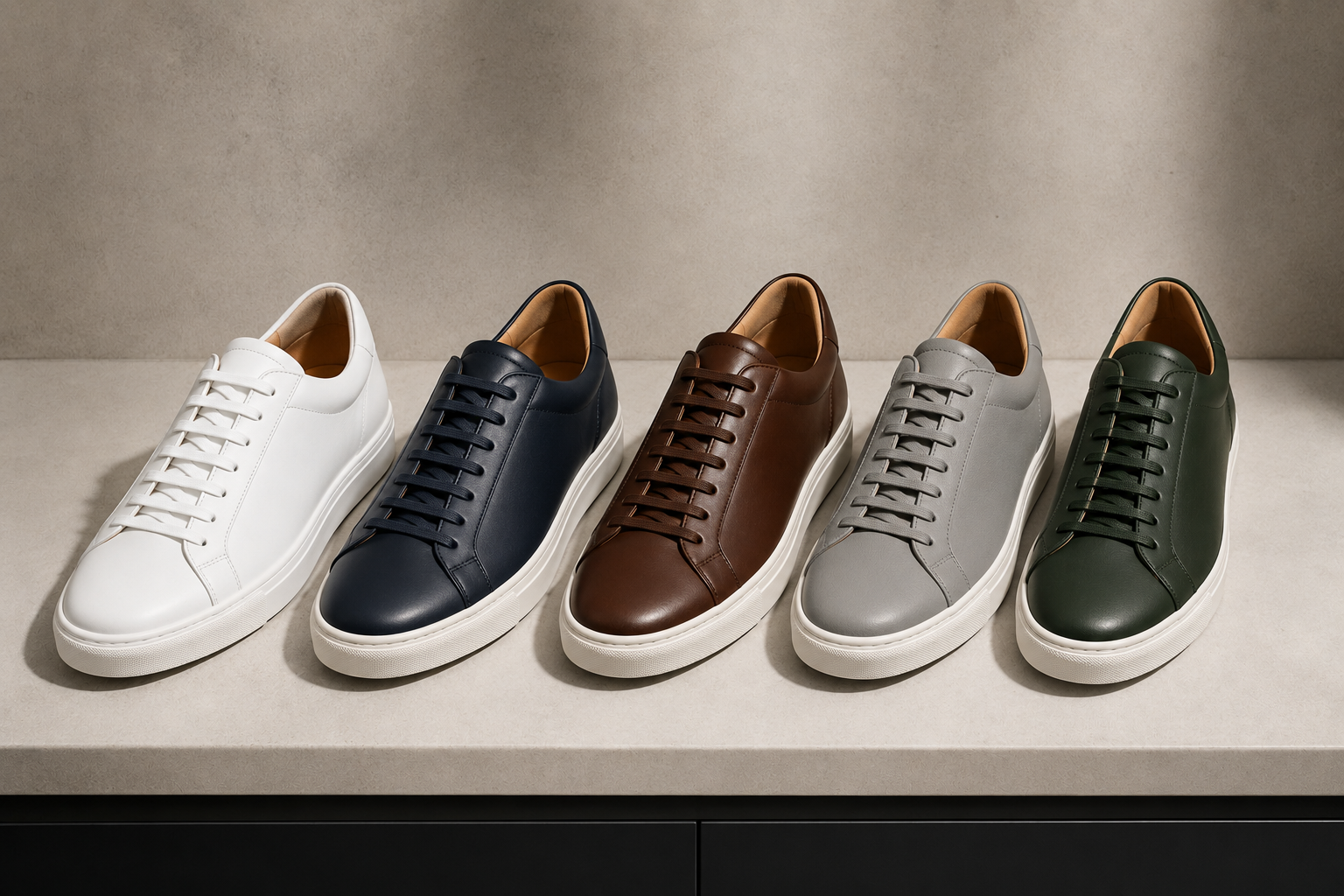
Trainers have earned a place in some professional settings, provided they are the right kind. A clean white trainer works well in many workplaces, as do navy, brown, grey, and green leather trainers, provided they are kept in genuinely good condition and free from visible wear. Uniform Standard is a good reference point for this look, their minimalist leather sneakers are exactly the kind of clean, considered trainer that holds up in a professional setting.
Sandals are a genuinely big story for men in 2026, with a run of well known facesspotted in styles that are refined, minimal, and easy to wear well. Here are five of the biggest trends worth knowing:
Fisherman sandals. Closed toe, woven leather uppers that protect the forefoot while still letting air through, a more structured option for anyone nervous about bare toed sandals in a work setting.
Suede sliders. A step up from the classic rubber slide, suede brings a noticeably more expensive look to a simple silhouette.
Leather Birkenstocks. The cork footbed has been a favourite for years, but leather versions in particular age well and look considerably more polished than the original suede.
Dress sandals. A leather strapped sandal clean enough to wear to dinner, this fills the gap between trainer and proper shoe that most men do not realise they have.
Minimal buckle sandals. Simple, unbranded designs with a single strap or buckle detail, favouring quality material over logos.
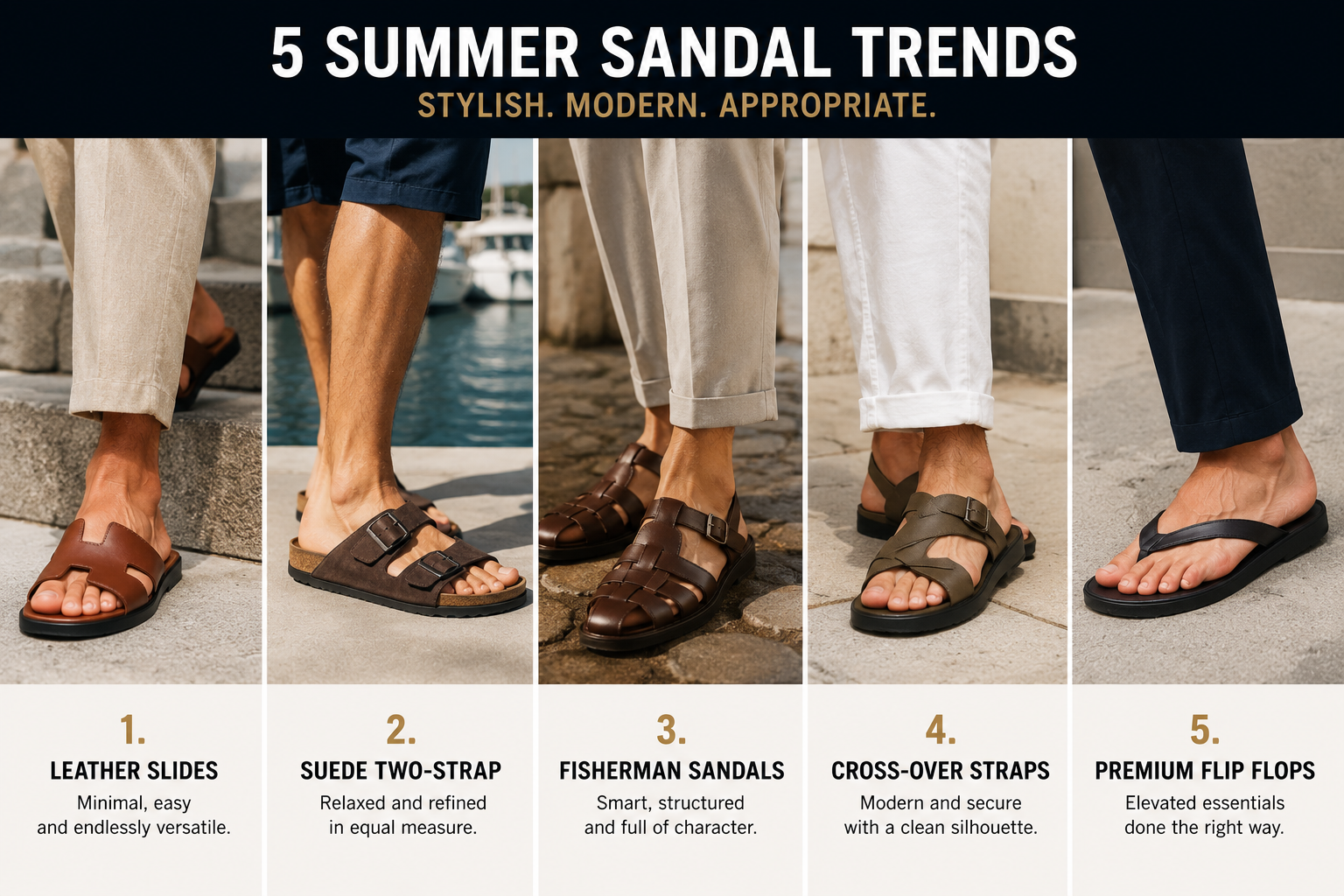
If you want sandals that look genuinely expensive, choose leather or suede over synthetic materials, keep the design simple, and make sure they actually fit properly.
Well groomed feet matter just as much as the sandals themselves, arguably more. The best summer footwear should look intentional, like a considered choice, not like you have just wandered away from the pool.
Flip flops remain a no. They may occasionally turn up on a red carpet, but that does not make them right for work, or arguably for much else.
Sliders without the suede upgrade above are not suitable for a professional look under any circumstance, they read as bedroom or beach footwear rather than city footwear.
A backpack is rarely the right call in serious heat. Bags worn on the back trap heat against the body and add unnecessary bulk. A different sort of carrier, a structured tote, a crossbody, or a smart briefcase style bag, keeps you cooler and looks considerably sharper.
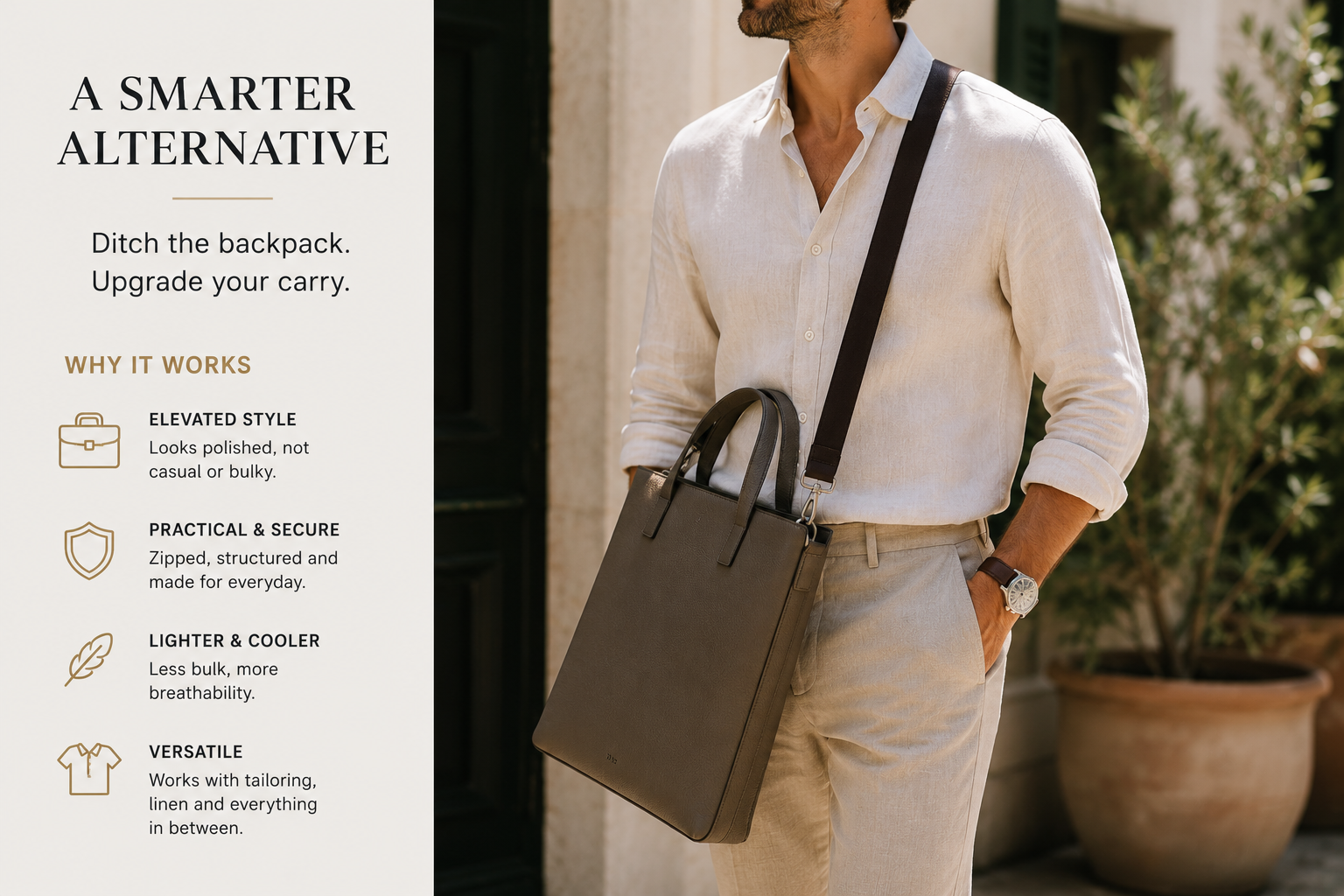
Certain fabrics and pieces come up every single summer as heatwave dressing mistakes.
Fabrics to avoid:
Clothes to avoid:
Baggy graphic t shirts, gym shorts, and flip flops. Anything that looks like sleepwear does not belong in a working environment.
Not everyone has the flexibility to dress down in a heatwave. Where a dress code exists, it should be respected, heat is not a reason to abandon it altogether. If you are ever unsure how far you can push things, a good rule of thumb is to dress as though you might be pulled into an impromptu meeting with your boss, your manager, or the CEO. If that outfit would hold up in that moment, it is doing its job.
A suit cut in a tropical wool or a lighter weave performs completely differently to a heavier winter cloth, even in the same silhouette. Losing the tie and switching to a breathable shirt underneath are small adjustments that make a real difference without abandoning the dress code altogether.
The real downfall in a heatwave is being caught out underprepared. Choosing outfits ahead of time and having shirts ready and ironed removes the guesswork on the hottest days, when decision making is the last thing anyone wants to deal with. A few outfits planned and ready to go means you always have a clear, considered option rather than reaching for whatever is coolest in the moment, regardless of how it looks.
Sweats in the city does not have to mean standards melt with the temperature. A littleplanning, the right fabric, and some structure go a long way.
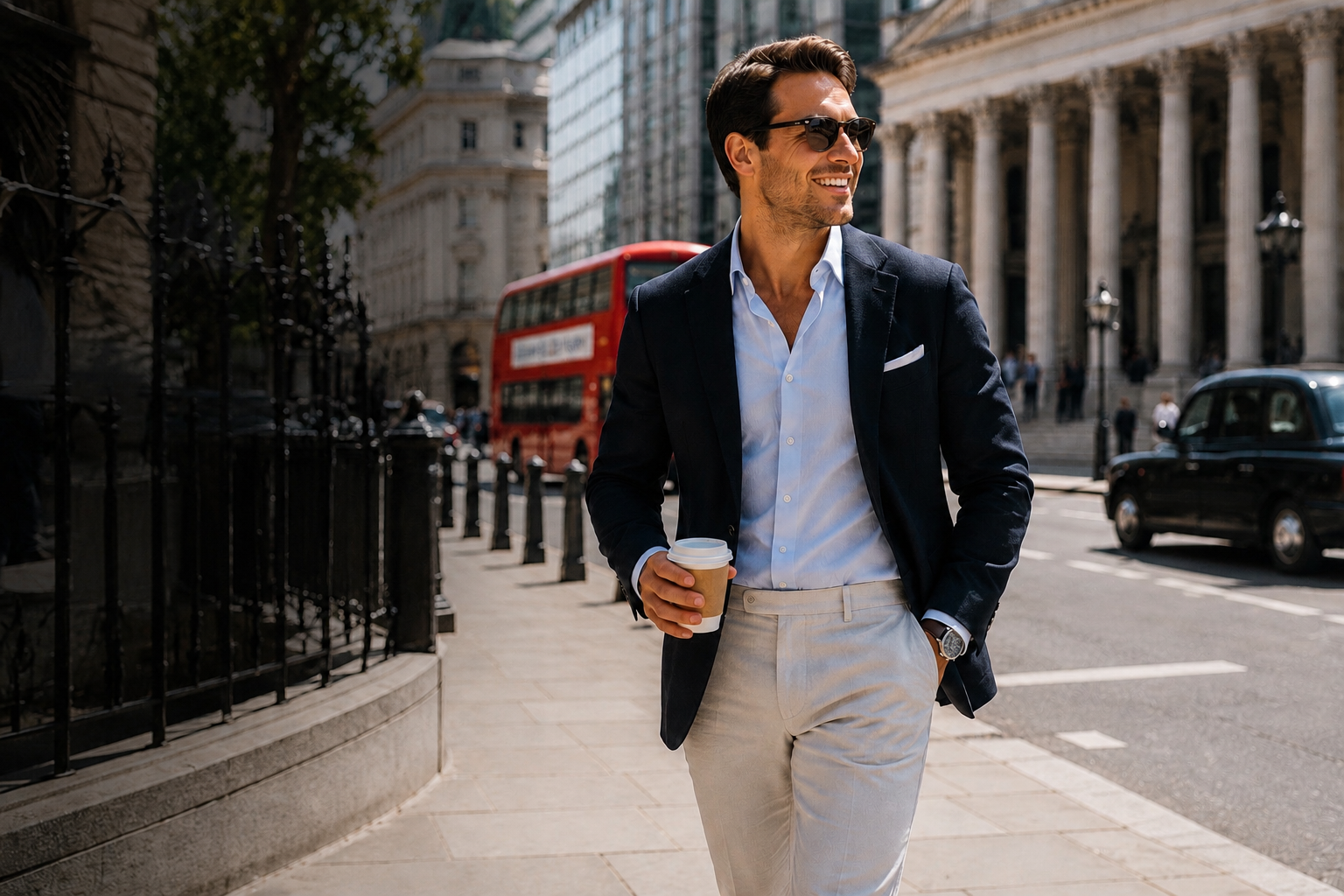
What should men wear to work in a heatwave? Lightweight natural fabrics such as linen, cotton, and seersucker, in a lighter colour, with a structured fit rather than an oversized one. Oxford shirts, linen shirts, and Cuban collar shirts all work well, paired with structured trousers or shorts with belt loops.
What fabric is best for hot weather work clothes? Linen, lightweight cotton, seersucker, and tropical wool blends. All of these breathe well and avoid trapping heat the way synthetic fabrics do.
Can you wear shorts to work in hot weather? Where the dress code allows it, yes, provided they are structured with belt loops rather than resembling casual or beach shorts.
What shoes should men wear to work in the heat? Clean trainers in white, navy, brown, grey, or green leather work in many settings. Smart sandals, including fisherman sandals, leather Birkenstocks, or dress sandals, are increasingly acceptable. Flip flops and basic sliders are not appropriate for work.
Phill Tarling is a Corporate Style Consultant and Menswear Stylist based in the capital, working with executives, presenters, and high profile individuals through his proprietary methodology, The Science of Styling.
