Dressing with Intention: The Executive’s Guide to Strategic Style
The difference between leaders who command a room and those who fade into it comes down to one thing: intention.
What Is Dressing with Intention?
Dressing with intention means choosing your clothes deliberately rather than reaching for whatever’s convenient, resulting in a more polished and put together presentation of yourself.
It’s wearing clothes that support with your professional objectives, communicate your credibility, and project the image of a capable leader. This isn’t about expensive suits or rigid rules. It’s understanding that every element of your appearance sends a message. When you dress with intention, you control the conversation.
What Happens When You Don’t
People judge your competence within seven seconds. Even if they don’t say anything. Long before you speak, they’ve decided whether you’re credible.
Diminished Executive Presence: Choosing convenience over intention signals that details don’t matter to you. If you can’t manage your own presentation, why would anyone trust you with strategic decisions?
Stalled Advancement: Senior roles require authority. Leaders who dress reactively get overlooked for promotions and excluded from client meetings. Not because they lack ability, but because they lack the visual credibility that inspires confidence.
Lost Client Trust: Your appearance communicates value. When your wardrobe suggests carelessness, it raises questions about your commitment to their business.
Competitive Disadvantage: Two equally qualified candidates. Same experience, same credentials. The one who presents with polish wins.
Dressing for convenience creates mediocrity. Research on enclothed cognition confirms what effective leaders know: what you wear affects how you think and perform. Dressing with intention sharpens your execution.
3 Keys to Dressing with Intention
1. Know Your Objective
Client presentation: Authority and appropriate polish. Match or slightly exceed client expectations. Leadership meeting: Executive presence. Dress as a peer to senior leadership. Networking event: Approachability with professionalism. Standard office day: Consistency maintains your brand. Once you know the objective, select clothes that support it.
2. Master Fit and Coordination
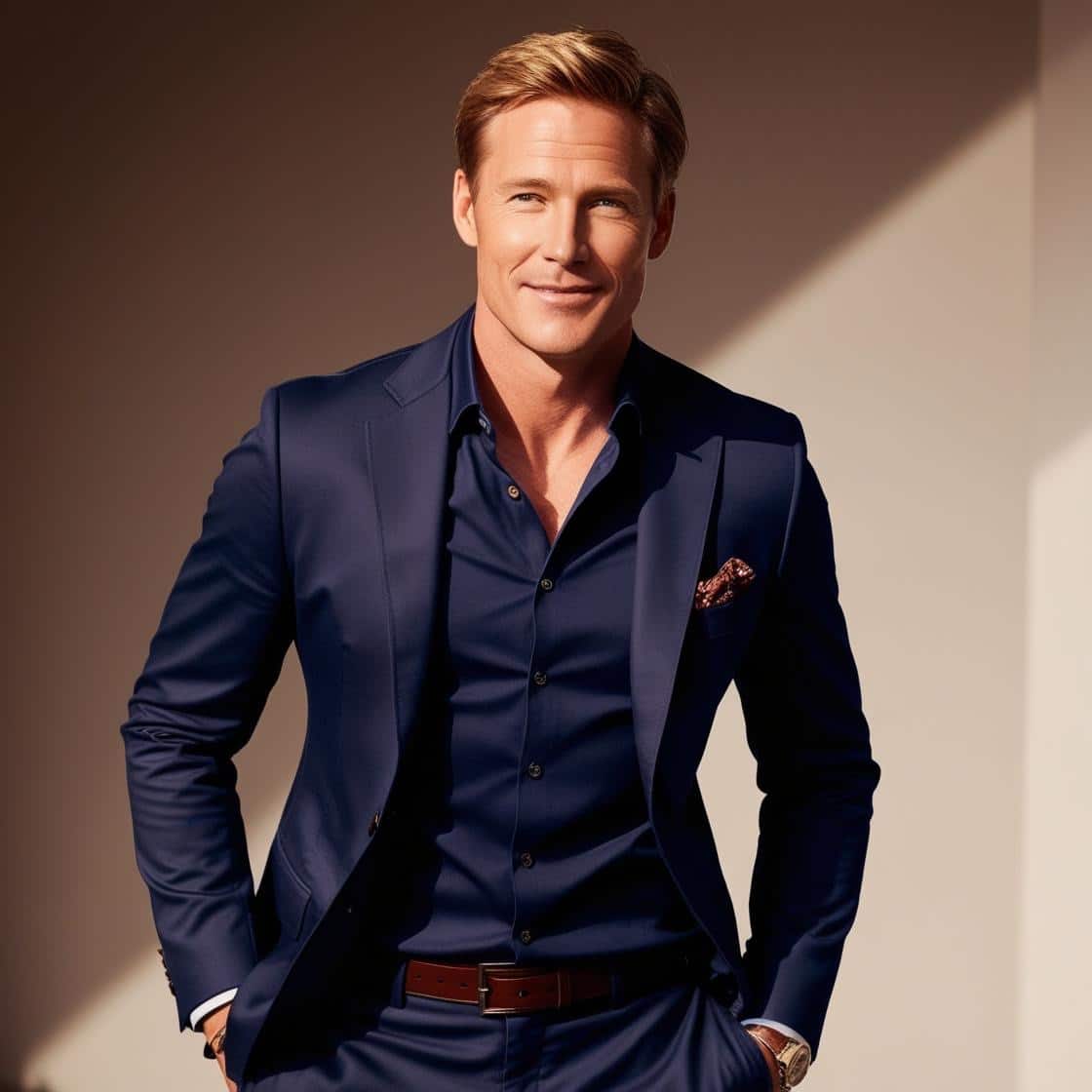
Fit is everything: Clothes should skim your body without pulling. Shoulders align with your natural line. Sleeves end at the wrist bone. Trousers break clean at the shoe. Understanding your body shape lets you select cuts that enhance your proportions. Colour coordination: Maximum three core colours per outfit. Intentional contrast between jacket, shirt, and tie. Neutrals (navy, charcoal, grey) provide versatile foundations. Dress code fluency: Know the difference between business formal, business professional, and smart casual. Never underdressed, never inappropriately overdressed.
3. Build Systems for Consistency
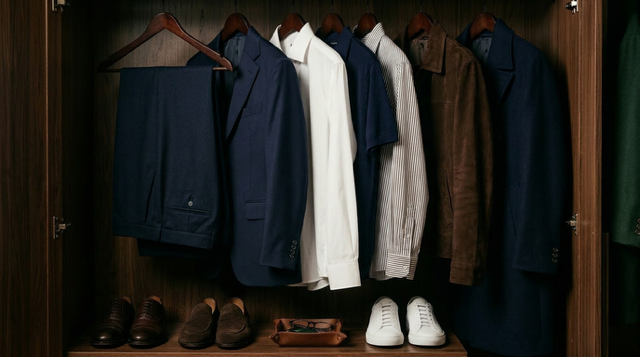
Wardrobe editing: Eliminate what doesn’t fit or align with your current position. Twenty excellent pieces beat one hundred mediocre options. Strategic planning: Create outfit formulas for common scenarios. Document what works. Preparation: Select your outfit the night before. Ensure shoes are polished, accessories ready. Maintenance: Build relationships with a trusted tailor and dry cleaner. Address fit issues immediately. Seasonal assessment: Review quarterly. Strategic purchasing, not reactive emergency buys.The Science of styling: what’s behind First Impressions.
The human brain makes judgments about competence and trustworthiness within seconds. These initial assessments create a halo effect that influences everything that follows.
Drawing on 30 years of experience and research, the science of styling reveals key psychological principles:
Processing Fluency: The brain favours information that’s easy to process. A polished, coordinated appearance processes faster, creating positive associations.
Status Signalling: Throughout human history, appearance has communicated position and capability. In corporate contexts, polished presentation signals success and belonging in leadership spaces.
Enclothed Cognition: What you wear affects your psychological state and performance. Research shows professional attire enhances abstract thinking, negotiation outcomes, and leadership behaviours.
When you dress with intention, you engineer a positive first impression that creates immediate credibility, positions you as a peer in hierarchical interactions, and demonstrates respect. This advantage compounds over time, building your personal brand.
London Menswear Stylist and Image coach for CEOs.
While these principles provide foundation, personalised guidance accelerates results and prevents costly mistakes.
Strategic Styling Session: A consultation assesses your current wardrobe, identifies gaps, and creates actionable outfit formulas tailored to your professional context and body shape. Working with a personal stylist delivers immediate improvements in executive presence.
Comprehensive Wardrobe Edit: A wardrobe edit eliminates decision fatigue, identifies your best existing combinations, any gaps and creates a strategic plan. For busy professionals, a wardrobe consultation in London ensures your wardrobe supports and works as hard as you.
Personal Shopping Services: For executives navigating career transitions, personal shopping for men in London provides ongoing guidance. The best wardrobe is one that naturally evolves with your role.
As an image consultant for men in London specialising in corporate menswear, I work with CEOs, senior executives, and professionals who understand that credible leadership requires both capability and presentation.
5 Frequently Asked Questions
Q1: How do I start dressing with intention if my wardrobe is convenience based?
Start with assessment: Photograph yourself in current work outfits. Evaluate objectively: what message does this send? Identify your three most successful outfits and analyse why they work. Invest in fit corrections for existing quality pieces before buying new items. Make each future decision more strategic than the last.
Q2: How do I balance company culture with dressing with intention?
Be the best dressed version of what’s appropriate for your environment. In a business casual office, this means perfectly fitted chinos and jackets that fit and flatter your body shape. Study what senior leadership wears, then match or slightly exceed that standard. You’re demonstrating cultural fluency while signalling readiness to be considered for your next career step.
Q3: How can I dress better as a man in the UK without looking overdressed?
Understanding fit and context prevents this. Overdressed typically results from formality mismatches, not quality. Dressing with intention at the appropriate formality level reads as polished, not pretentious. The goal is effortless authority.
Q4: What should men wear to work in the UK?
The most common mistake is to focus on quality rather than quality. An expensive suit that fits poorly delivers less impact than a midrange suit expertly tailored. Before adding pieces, check existing clothes fit correctly and work in effective combinations. A capsule wardrobe for men in the UK built on quality and fit outperforms quantity.
Q5: How often should I update my professional wardrobe?
Major role changes warrant reassessment and updates. Beyond that, replace worn items immediately, add seasonal updates annually, and conduct comprehensive wardrobe edits every 12 to 18 months. Quality core pieces last years with proper care.
Successful men know every detail counts, and time is money. They leave nothing to chance—they’re constantly looking for ways to sharpen their edge. Showing up well isn’t a luxury; it’s…
Trustindex verifies that the original source of the review is Google.
Phill is nothing short of a magician for men’s style. His wardrobe redesign wasn’t just a service—it was a transformation. From head to toe, every piece he curated, every detail he adjusted, has drawn head-turning compliments. It’s not just a wardrobe; it’s a statement.
Phill doesn’t merely dress you; he educates you. The day wasn’t just about picking clothes—it was a masterclass in style, fit, and confidence. The way he demystifies fashion and aligns it with personality and purpose is both inspiring and empowering.
The feedback has been extraordinary. Friends, colleagues, and even strangers have taken notice. It’s proof of Phill’s unmatched talent and meticulous eye. If you’re looking to elevate your style and learn in the process, Phill is not just a recommendation—he’s a revelation.
Thank you!
Posted on Google
Lansing Lee
Trustindex verifies that the original source of the review is Google.
Phill is an absolute expert when it comes to style and dressing well. In our personal styling session, he was detailed, thorough, and easy to work with all the way through. He listened intently and gave really strong advice. On the day of our session together, I walked away not only with better clothes, but a lot of knew knowledge about how to style and pick out clothing myself. Really couldn't recommend this highly enough.
Posted on Google
S B
Trustindex verifies that the original source of the review is Google.
Phil was an excellent resource for helping me update my wardrobe after feeling like I’d long been neglecting my ‘look’. I work in the creative media industry, so attention to taste and style was important to me. Phil was spot on with all of his recommendations and had great advice on tailoring and fit as well. It gave me the lift i needed. If you’re on the fence at all, I would say don't hesitate to give him a call. Was well worth it for me!
Posted on Google
Sheena Holton
Trustindex verifies that the original source of the review is Google.
Loved working with Phil!! He has such a high level of expertise and puts you at ease from the word go. I really appreciated his honest approach and have loved the changes we made in my wardrobe as a result of his feedback. He really cares about making you feel good and it shows in both the process and the end result!
Posted on Google
Tom S
Trustindex verifies that the original source of the review is Google.
Phill is that rare thing, someone who is top quality in his field, and also a truly decent person who is very enjoyable to spend time with. He not only clearly knows his stuff, sharing his expertise and insight (and passing on discounts where possible), but also provides access to his network built up over many, many years. Combined with his balanced, no ego, clear style this creates a great experience. He is also highly attuned to the bespoke nature of what each person is looking for and it was without doubt therefore a 5 star service for me which I strongly reccomend to others considering it (with most efficiency and impact gained from starting with a wardrobe edit followed by a styling session).
Posted on Google
Peter McCammon
Trustindex verifies that the original source of the review is Google.
I had a consultation with Phill in March 2024. I am 55 years old and had never done anything like this before. From start to finish I had an brilliant experience working with Phill. The whole process is well thought through. By the time we met in London Phill was really clear on what I wanted and he delivered with professionalism and enthusiasm. Phill is a also a great guy and I really enjoyed my time with him. My wardrobe is transformed forever and how I think about dressing myself has also transformed. I am delighted with the outcome and so is my wife. I have no hesitation in highly recommending Phill Tarling.
Posted on Google
A P
Trustindex verifies that the original source of the review is Google.
I was looking for a Birthday gift for my partner. I approached Phill, and he has performed nothing short of a miracle.
It is safe to say that I have never seen my other half return from a shopping session energised - let alone hear him say that he now knows what to buy, what to wear and how to combine everything to the best effect.
Thanks to Phill and his magic, my partner has gone from depressed and dejected to confident and effortlessly stylish over the course of one day.
Phill, thank you once again for having made him see his true potential. To say your effect has been transformational is an understatement.
Posted on Google
Pete Deemer
Trustindex verifies that the original source of the review is Google.
I can't recommend Phill highly enough -- I love the wardrobe he helped me put together -- it really feels like "me", and the experience was enjoyable from start to finish. Looking forward to doing this again with Phill!
Posted on Google
Hugh Millington
Trustindex verifies that the original source of the review is Google.
Phill Tarling is an exceptional stylist and a wonderful person, and I can't recommend him highly enough. Phill was the stylist for our photoshoot in July 2022, at the recommendation of the photographer. Having not done that kind of shoot before, I was unsure of what to expect but I was amazed at how much Phill added to the experience and the results.
In the weeks leading up to the photoshoot, Phill was on hand by phone whenever we needed him, and he gave invaluable advice regarding our clothes and extra items we could get to make the most of the day. On the day, I was blown away by Phill's commitment and the incredible advice he gave. This included hearing our goals of how we wanted to present ourselves; giving his expert advice regarding how we could subtly elevate our styling, both as individuals as an ensemble; to choosing outfits that really made us look confident and feel incredible.
Phill also spent so much time helping prepare the outfits, and was with us throughout the day, helping me feel confident in front of the camera. I couldn't be happier with the results of the photoshoot, and I have so much to thank Phill for: the effects of his styling have led me to be excited about clothes and styling, and the confidence he instilled into me during the day has stayed with me. I feel more confident and comfortable within myself than ever, and I really have Phill to thank for this.
Posted on Google
Stefan Germann
Trustindex verifies that the original source of the review is Google.
I found Phil via a google search and planned with him to meet up on my next London trip (I live in Switzerland). His support was amazing, it was a very personalized styling experience as I like a minimalist, essential set of outfits that mix and match well. After meeting on Wednesday to go over the online pre-questionnaire, Phil then prepared all in 4 shops for a 4 hour session on Saturday morning. He is highly professional and has great relationships with staff in the shops. He is conscious of a clients budget etc. At no time did I feel pressured but the whole styling and shopping experience was fun and at the end I am getting great compliments on my wardrobe upgrade. Thank you Phil, warmly Stefan
This website uses cookies to improve your experience. We'll assume you're ok with this, but you can opt-out if you wish.AcceptRead More
Privacy & Cookies Policy
Privacy Overview
This website uses cookies to improve your experience while you navigate through the website. Out of these, the cookies that are categorized as necessary are stored on your browser as they are essential for the working of basic functionalities of the website. We also use third-party cookies that help us analyze and understand how you use this website. These cookies will be stored in your browser only with your consent. You also have the option to opt-out of these cookies. But opting out of some of these cookies may affect your browsing experience.
Necessary cookies are absolutely essential for the website to function properly. This category only includes cookies that ensures basic functionalities and security features of the website. These cookies do not store any personal information.
Any cookies that may not be particularly necessary for the website to function and is used specifically to collect user personal data via analytics, ads, other embedded contents are termed as non-necessary cookies. It is mandatory to procure user consent prior to running these cookies on your website.